

We are only a week into 2026, and already it feels inappropriate to talk about goals.
Not because ambition has vanished, but because the ground beneath leadership feels less like a launchpad and more like a listening post. The familiar January rituals – resolution-setting, strategic optimism, the brisk rhetoric of “this is the year” -sit awkwardly against the weight of what many school leaders are actually carrying: stretched systems, tired people, fragile trust, and a sense that the world schools are educating into is breaking again and constantly reassembling itself.
The question that seems to be emerging is not What should we do this year? but How are we being asked to move?
As a team, we mused in our first meeting of the year- is 2026 calling for the energy of the Horse—visible action, momentum, confidence, optimism enacted through decisiveness? Or are we still in something closer to the wisdom of the Snake—strategic, patient, attentive to timing, shedding old skins before rushing into the new?
Leadership rarely grants us the luxury of choosing just one mode. The late Stanford University professor, James March, famously suggested that leadership requires both poetry and plumbing. Poetry gives meaning, direction, and imagination; plumbing makes sure the systems work, the details hold, and the water actually flows. Schools need both. They always have. But the ratio matters, and it changes with context.
Right now, many leaders are exquisitely competent plumbers. They keep schools functioning amid complexity, constraint, and contradiction. What feels more fragile, endangered even, is the poetic dimension: the capacity to name what matters, to hold ambiguity without panic, to speak honestly about loss and possibility in the same breath.
A classic 60s song therefore keeps resurfacing in our heads this week. The Byrds’ Turn! Turn! Turn! borrows its lyrics from Ecclesiastes: a time to be born, a time to die; a time to plant, a time to reap; a time to keep, a time to cast away. The song doesn’t resolve these tensions. It doesn’t argue for one season over another. It simply insists that timing matters, and that wisdom lies in discerning which time we are in.
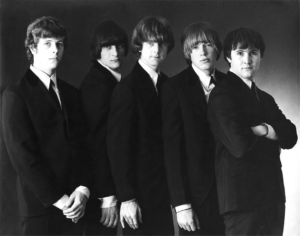
What can we learn from The Byrds and the zeitgeist around their 1965 hit song?
For school leaders, this matters deeply. There are times for bold reform and times for careful stewardship. Times for speaking loudly and times for listening more deeply than feels efficient. Times for building and times for composting—allowing outdated practices, narratives, or expectations to break down so something more honest can grow.
This is why, before strategy, before action plans, before another round of “what’s next,” there may be a more foundational invitation: to pause long enough to relationally attune. To sense where we actually are, personally, organisationally, culturally – rather than where we wish we were or feel pressured to appear.
Attunement is not inactivity. It is leadership work of a different tempo.
Next weekend at Interbeing, our goal is to allow that gentler tempo of ourselves, to be held in poetry, in inspiration and in community, to not run yet. To move at the speed of our senses before we tinker with the plumbing again in our schools.
“A time to build up, a time to break downA time to dance, a time to mournA time to cast away stonesA time to gather stones together…”
– Turn! Turn! Turn! The Byrds, 1965
Interbeing Dubai will be hosted at Al-Fanar School on January 17-18th. For more information and to join us in one of the last places, visit www.makingstuffbetter.com/interbeing
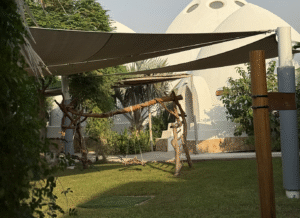
Our setting for Interbeing, Al-Fanar School in Dubai
